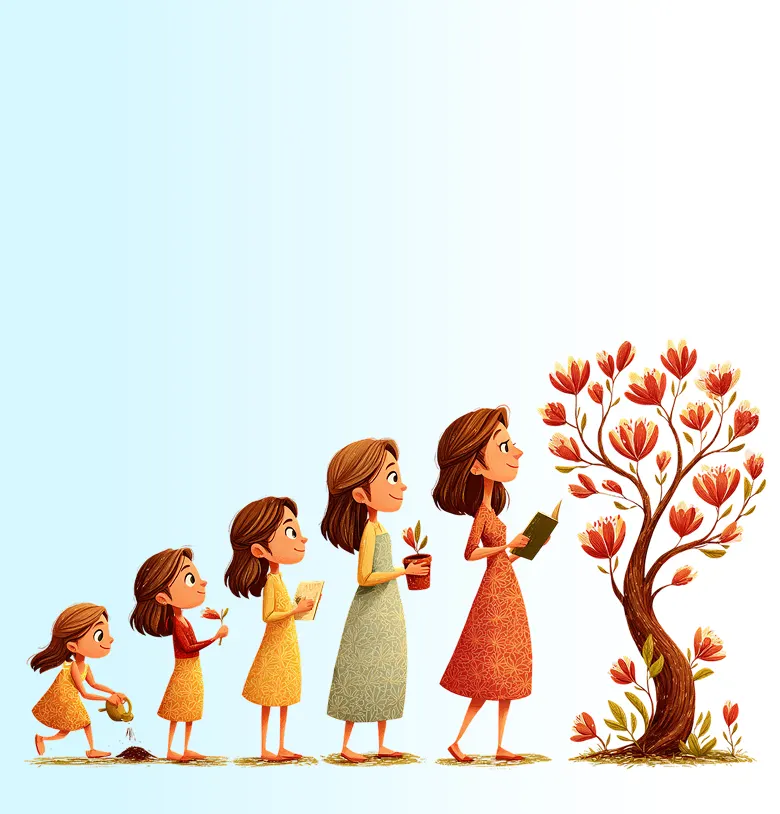

Child expressing art

Nurturing growth from childhood to
adulthood—fostering lifelong well-
being and expression

Our Core Methodology: The ArtBeat Trinity

We don't just teach creative art; we use it as a vehicle for human flourishing. Our curriculum is built upon five synergistic, evidence-based frameworks categorized into three pillars of impact:

The Foundation of Safety & Belonging

  • Framework: Trauma-Informed & Attachment-Based Care.
  • The Shift: We move beyond "safe spaces" to cultivate a deep internal feeling of safety. Safety is the prerequisite for joy.
  • The Impact: By ensuring every child feels fundamentally "okay" and accepted, we unlock their ability to take risks. Here, art is not a chore or a luxury—it is a fundamental right and a vehicle for authentic joy.

The Science of Emotion

  • Frameworks:
  • Atlas of Emotions: We utilize this scientific map of the five universal "continent" emotions—anger, fear, sadness, disgust, and enjoyment.
  • Positive Psychology: We focus on fostering strengths, resilience, optimism, and flourishing.
  • The Impact: By integrating these, we deepen emotional literacy and equip children with tools like agency and constructive coping for lifelong well-being.

The Path to Growth

  • Whole-Child Development Framework: We emphasize balanced growth across cognitive (Head), emotional (Heart), and physical-social (Hand) domains.
  • Social Emotional Learning (SEL): Our curriculum develops self-awareness, empathy, responsible decision-making, and relationship skills.
  • The Impact: Programs are tailored to developmental milestones, ensuring children grow into emotionally intelligent and socially responsible individuals.

Note for partners: Our SEL curriculum is globally benchmarked and ensures full compliance with India’s National Education Policy (NEP) 2024.

Stakeholder Roles

Child

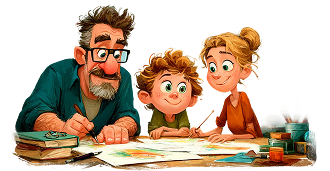
Artbeat reframes the child from passive beneficiaries to active co-creators in their development.

Their role:

1) Active Participation

2) Willingness to Explore

3) Respect for space and peers

Parents

Act as partners in their child's development by co-creating activities and engaging with the program.

Teachers

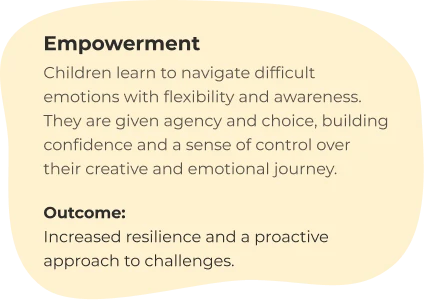
Children learn to identify and manage their emotions through creative art.

Schools

Provides the safe, physical space essential for the program's implementation.

Community, Peers, and
Environment

Provide a living context for the child's development, with interactions woven into the program's activities and outcomes.

Implementation Principles

Child painting illustration

Focused Immersion

Deep engagement with a single creative art form to foster mastery and profound emotional impact—a critical difference from multi-activity programs

Children of different heights illustration

Developmental Alignment

Age-appropriate modules tailored to distinct stages of development, ensuring maximum relevance and efficacy for every child aged

Mentor and child reading illustration

Trauma-Informed Facilitation

Our team serves as trained mentors, not therapists, delivering programs with the sensitivity and ethical care required to ensure participant safety and psychological trust
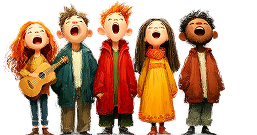
Group of diverse children singing illustration

Cultural and Contextual Relevance

Program adaptations honor linguistic, cultural, and local contexts to ensure every child feels seen, heard, and connected to their environment

Teacher and student with tablet illustration

Technology Integration

Use of digital platforms for scale, fidelity, and data-driven management, ensuring high implementation quality and ease of use for schools

Family and child gardening illustration

Family & Community Partnerships

Meaningful engagement strategies that involve caregivers and communities as active stakeholders to reinforce and sustain learning beyond the session

Artbeat's Whole-Child Competencies and Outcomes

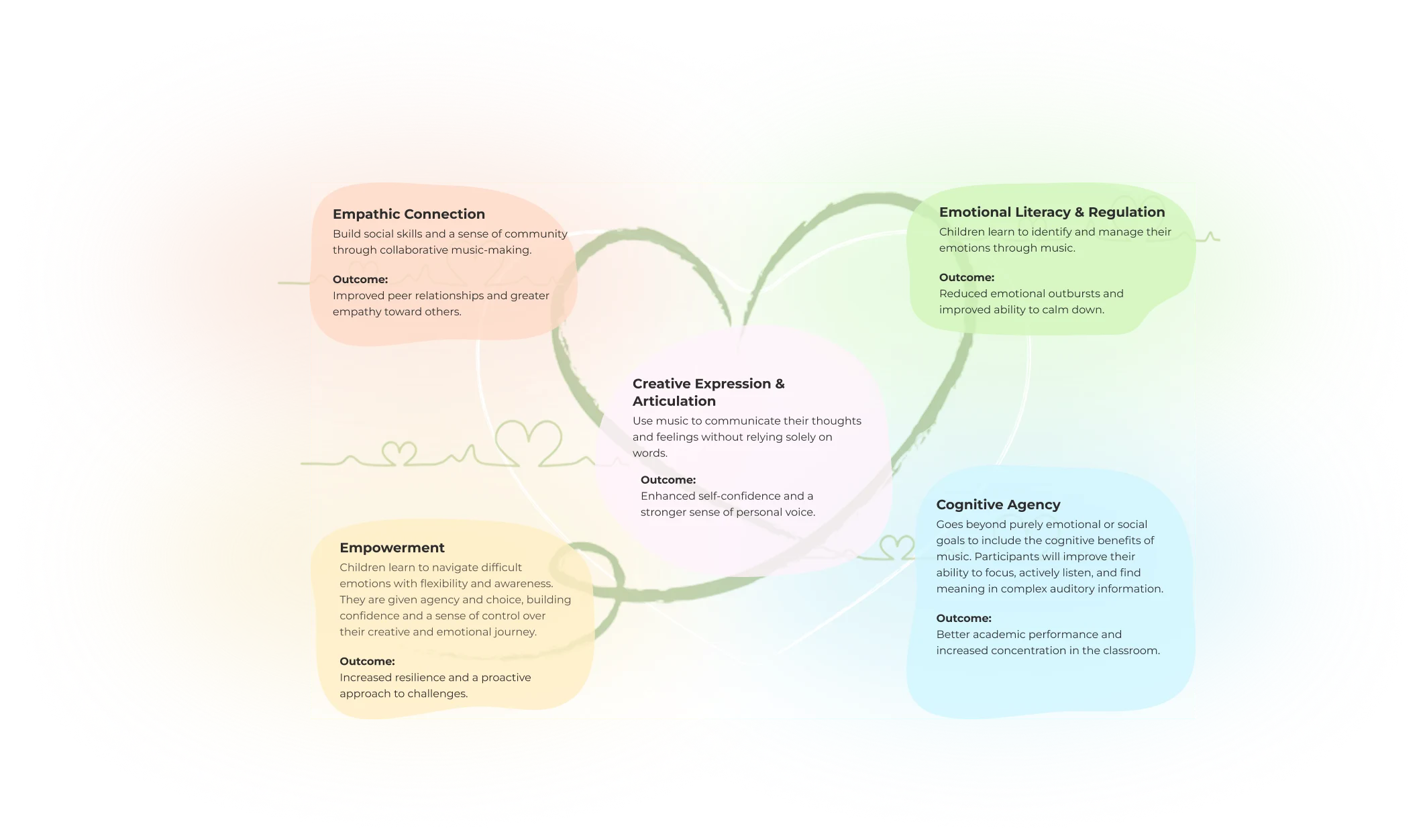
Our program nurtures whole-child competencies to support emotional, cognitive, creative, and social well-being—preparing children for life, learning, and flourishing together.

Benefits for the Child Mobile
Outcome 1Outcome 2Outcome 3Outcome 4Outcome 5
Program Illustration

Aaroh (Music-Based Program)

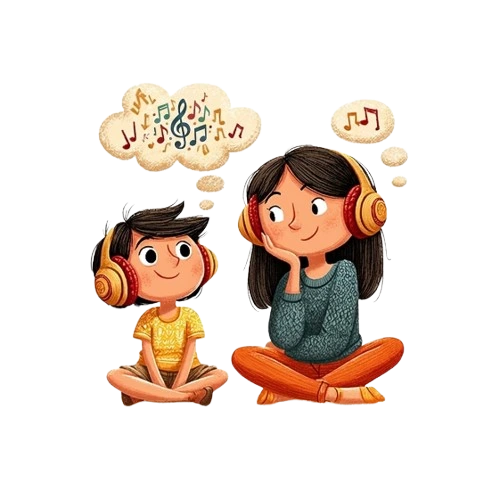
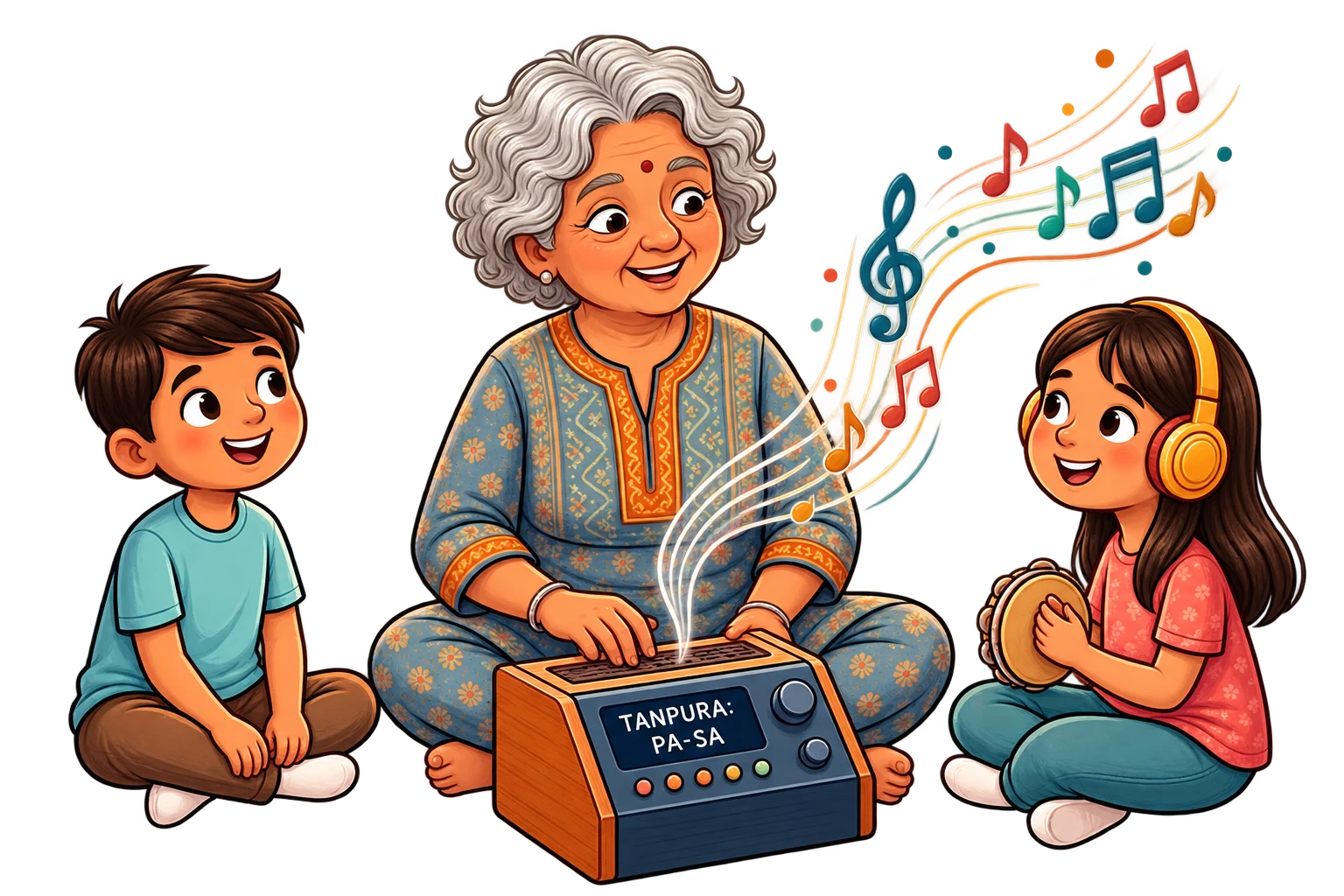
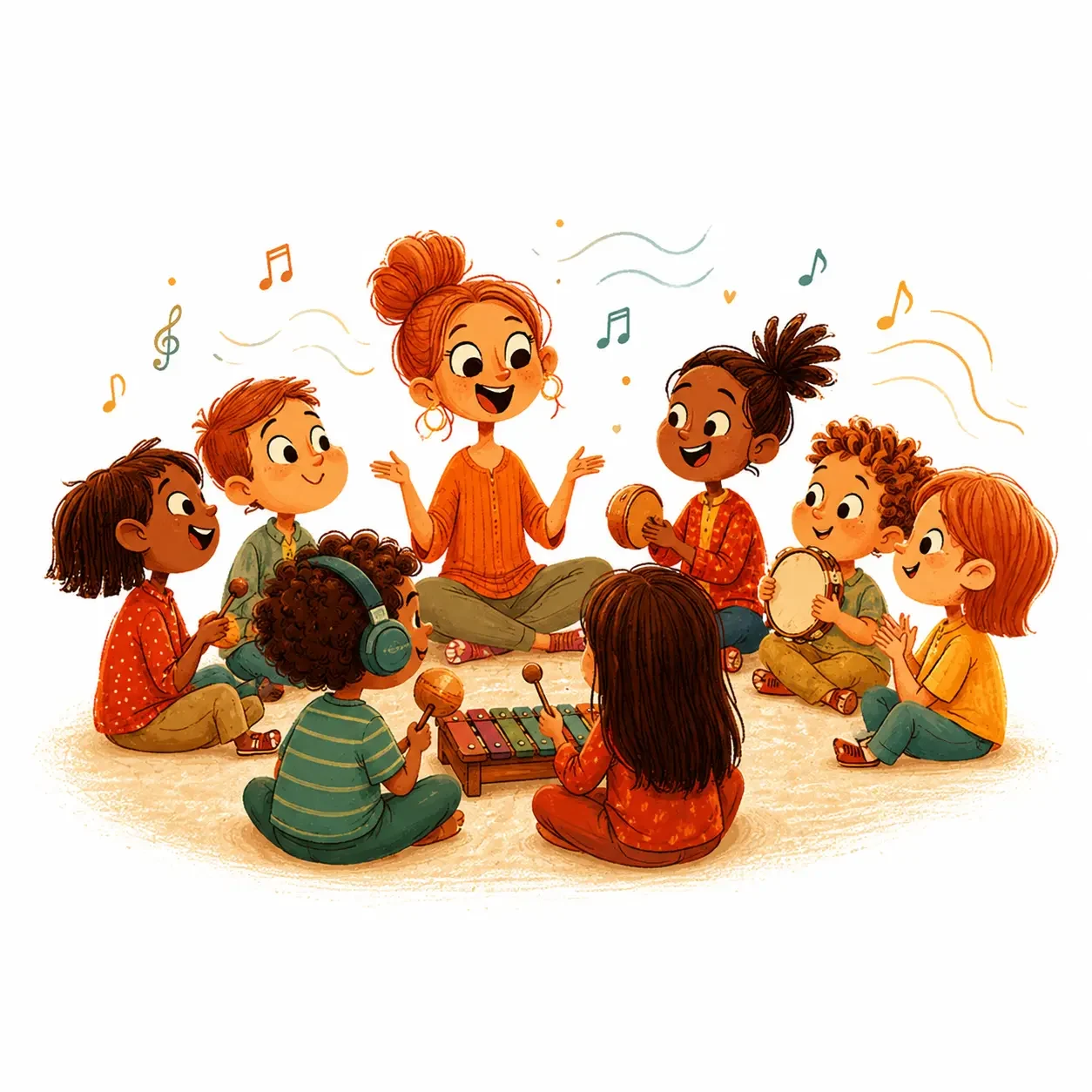
Aaroh is an immersive music program that invites children to explore the rich tapestry of sound. By engaging with diverse instruments and rhythms, children find a unique medium for self-expression and emotional agility.

Neurological & Emotional Foundations:

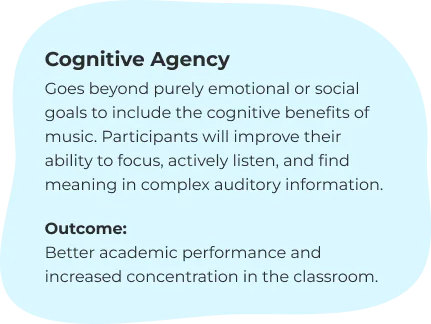
Musical engagement enhances brain plasticity and strengthens the executive function areas responsible for focus and memory. Emotionally, rhythm and melody serve as a "nervous system regulator," helping children soothe anxiety, build resilience, and find a sense of harmony within themselves.

Genres & Exploration

While Carnatic Classical forms the structural foundation, the curriculum is a living exploration of sound.

  • Contextual folk music
  • Hindustani rhythms
  • Jazz
  • Contemporary fusion
  • Tactile discovery—using voice, percussion (like the mridangam and djembe), and melody instruments to understand cultural storytelling through sound.

Select Preferred Age Group :

Curriculum Overview

In this stage, we focus on sensory-rich exploration where the body is the primary tool for learning. The curriculum integrates:
  • Body, Breath & Gross Motor Awareness: Developing physical coordination, balance, and large-scale movement to build confidence and spatial awareness
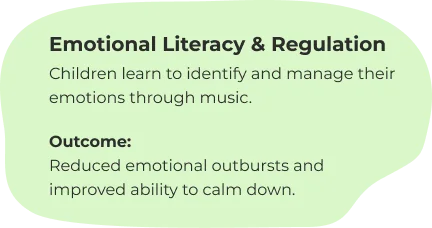
  • Emotional 'Continents' & Mood Regulation: An introductory journey into the Atlas of Emotions, using sound and rhythm to identify and soothe "big feelings."
  • Soundscapes & Nature: Connecting with the world through listening, mimicking nature's rhythms, and exploring early storytelling.
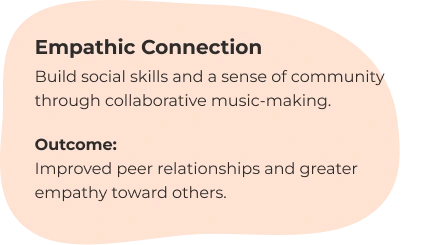
  • Community & Creative Play: Collaborative movement and "Anand" (play) sessions that foster early social cooperation and reflection.

Goals & Intended Outcomes

  • Emotional Recognition: Ability to identify and express basic emotions through specific sounds, colors, or movements.
  • Self-Regulation: Developing early breath control and the ability to use "rhythmic grounding" to manage energy levels.
  • Physical Coordination: Demonstrating improved gross motor control and an awareness of personal space within a group.

Benefits

  • Neural Priming: Enhances brain plasticity by connecting physical movement (gross motor skills) with cognitive pattern recognition
  • Social Comfort: Reduces separation anxiety and builds foundational trust
  • Language Readiness: Strengthens the relationship between rhythm and speech patterns, supporting early communication and literacy.
  • Emotional Literacy: Enables children to identify and express basic feelings safely using sounds, colors, or movement
  • Novel Toolkits: Equips teachers with arts-infused, developmentally appropriate strategies to engage high-energy preschoolers.
  • Responsive Observation: Provides a framework to observe and respond to early emotional and social cues, making classroom management more intuitive.
  • Calmer Environment: By channeling energy into structured sound and movement, teachers experience a more focused and regulated classroom atmosphere.
  • Collaborative Inquiry: Offers creative "entry points" that complement any existing curriculum, making abstract concepts tangible for young learners.
  • Holistic Integration: Demonstrates a commitment to the "Whole Child," ensuring that emotional and social growth are treated with the same rigor as cognitive milestones
  • Evidence-Based Environment: Implements a framework grounded in positive psychology and trauma-informed care, elevating the school’s standard of student support.
  • Community Cohesion: Fosters a school culture where "Play is a Right," attracting families who value a balanced, research-backed approach to early education.
  • Visibility into Wellbeing: Offers a meaningful window into the child’s inner world through their creative expressions and emotional milestones.
  • Harmonious Transitions: Supports the child’s ability to self-regulate, often resulting in more confident social interactions and emotional stability at home.
  • Pressure-Free Mastery: Ensures the child develops an authentic love for the arts, built on a foundation of joy and discovery rather than performance-driven expectations.
Program Illustration

Anand (Play-Based Program)

Anand is a joyful, play-based well-being program designed to nurture a child’s natural curiosity and spontaneity. We believe that play is a right rather than a reward —it is the essential language through which children explore the world. By centering "play" as a primary creative medium, Anand helps children build foundational resilience and social-emotional skills in a low-pressure, high-engagement environment.

Neurological & Emotional Foundations

Play stimulates the prefrontal cortex (executive function) while regulating the amygdala (the brain's emotional centre). It provides a "safe container" for children to practice social roles and manage big emotions without the fear of failure.

Genres & Exploration

  • Structured play
  • Imaginative role-play
  • Sensory exploration
  • Cooperative games
  • Movement-based storytelling, etc.

Select Preferred Age Group :

Curriculum Overview

Designed around material exploration, sensory discovery, and nature-based play, this stage supports children as they transition from solitary to parallel and early cooperative play. In blended indoor–outdoor environments, children engage with loose parts, natural materials, textures, movement, and sound, constructing meaning through hands-on, open-ended experiences.

  • Key Themes: Sensory-rich environments, nature play, movement and the creation of “safe spaces” using flexible materials such as cloth, wood, boxes, stones, and found objects.

Goals & Intended Outcomes

  • Development of gross motor coordination
  • Sensory integration
  • Early self-regulation supported through rhythmic movement
  • Tactile exploration and calming material-based play experiences.

Benefits

  • Strengthens whole-body learning through carrying, stacking, pouring, climbing, and building
  • Integrating physical development with cognitive growth.
  • Reduces separation anxiety through grounding sensory and nature-based experiences.
  • Builds social comfort through shared, non-competitive, material-rich play.
  • Provides meaningful opportunities to observe sensory preferences
  • Motor development, emotional regulation, and emerging social skills through children’s interactions with materials and space.
  • Establishes a learning culture where hands-on
  • Exploratory play is recognised as a core pathway to engagement, well-being, and early learning.
  • Affirms the importance of open-ended, tactile, and imaginative discovery as foundational to confidence, curiosity, and emotional security.
Program Illustration

Aakaar (Visual Arts Program)

Aakaar is an immersive, process-oriented visual arts program developed in collaboration with ArtSparks Foundation. It invites children to engage in non-verbal communication and self-discovery by treating art as a vital language. Through Aakaar, children translate inner experiences into visible form, fostering the mental clarity and emotional resilience necessary for lifelong flourishing.

Neurological & Emotional Foundations

Visual arts engagement significantly enhances spatial reasoning and strengthens connections between the motor cortex and emotional processing centres. Emotionally, it serves as a "safe container" for externalizing complex feelings that are often difficult to verbalize. This process reduces cortisol levels (stress) and promotes a state of "flow", essential for cognitive well-being and trauma-informed healing

Genres & Exploration

The curriculum prioritises process over product, encouraging tactile discovery across various media.

  • Fluid Media (Watercolours, tempera)
  • Dry & Wax Media (Pastels, Charcoal) for tactile pressure, and Three-Dimensional Art (Clay, Sculpture) for spatial awareness.
  • Mixed Media
  • Reflective & Narrative Art
  • Collaborative and community Murals, etc.

Select Preferred Age Group :

Curriculum Overview

Focuses on sensory-motor engagement, "mark-making," and the joy of tactile discovery.

    Goals & Intended Outcomes

    Development of fine motor skills; association of colors/textures with basic emotions.

      Benefits

      • Gross Motor & Sensory Integration: Using large-scale movements to paint or sculpt helps integrate gross motor coordination with sensory input.
      • Sensory Grounding: Tactile engagement with clay and paint reduces anxiety and builds "visual confidence."
      • Provides non-verbal tools to observe a child's energy levels and emotional state through their choice of pressure and colour.
      • Promotes a rich, developmentally appropriate sensory environment that respects early physical milestones.
      • Offers a window into the child’s burgeoning imagination and physical motor progress.
      Program Illustration

      Akshar (Writing-Based Program)

      Akshar is a reflective writing program that empowers children to explore their inner worlds and strengthen self-awareness. By nurturing a child’s unique narrative voice, Akshar transforms writing from a functional skill into a creative tool for emotional processing, storytelling, and personal agency.

      Neurological & Emotional Foundations

      Writing helps "linearise" complex, multi-layered thoughts, aiding cognitive organisation and executive function. Emotionally, the act of journaling or storytelling allows children to externalise internal conflicts, providing a sense of distance and mastery over their emotions. This process strengthens the "narrative self," which is essential for building a coherent understanding of identity and long-term psychological resilience.

      Genres & Exploration

      The curriculum moves writing beyond the desk through tactile discovery. By experimenting with varied "textures" of language—from the rhythm of a letter to the self to the structure of a collaborative narrative—children learn that the pen is a physical tool for emotional grounding and personal agency.

      • Sensory Journaling
      • Metaphorical Map-Making
      • Guided Journaling
      • Poetry and Metaphor
      • Narrative Fiction
      • Reflective Essays
      • Children engage in "Letter Writing to the Self"
      • Collaborative storytelling
      • Nature-inspired descriptive writing

      Select Preferred Age Group :

      Curriculum Overview

      Focuses on the transition from oral storytelling to written expression, using simple structures to explore identity.

      • Key Themes: Character-building based on emotions, "Feeling Journals," and collaborative group stories

      Goals & Intended Outcomes

      Cognitive Literacy (sequencing events and cause-effect); identifying personal "Values" through story characters.

        Benefits

        • Builds confidence in their "voice" and helps them organize thoughts that feel scattered or overwhelming.
        • Provides a window into the child's social perceptions and language development through their creative narratives.
        • Fosters a culture of "Listening and Sharing" where every child’s story is valued as part of the community fabric.
        • Gains insight into the child's daily experiences and social interactions through their written reflections.