Agency Over Pity: My Visit to ASHA School
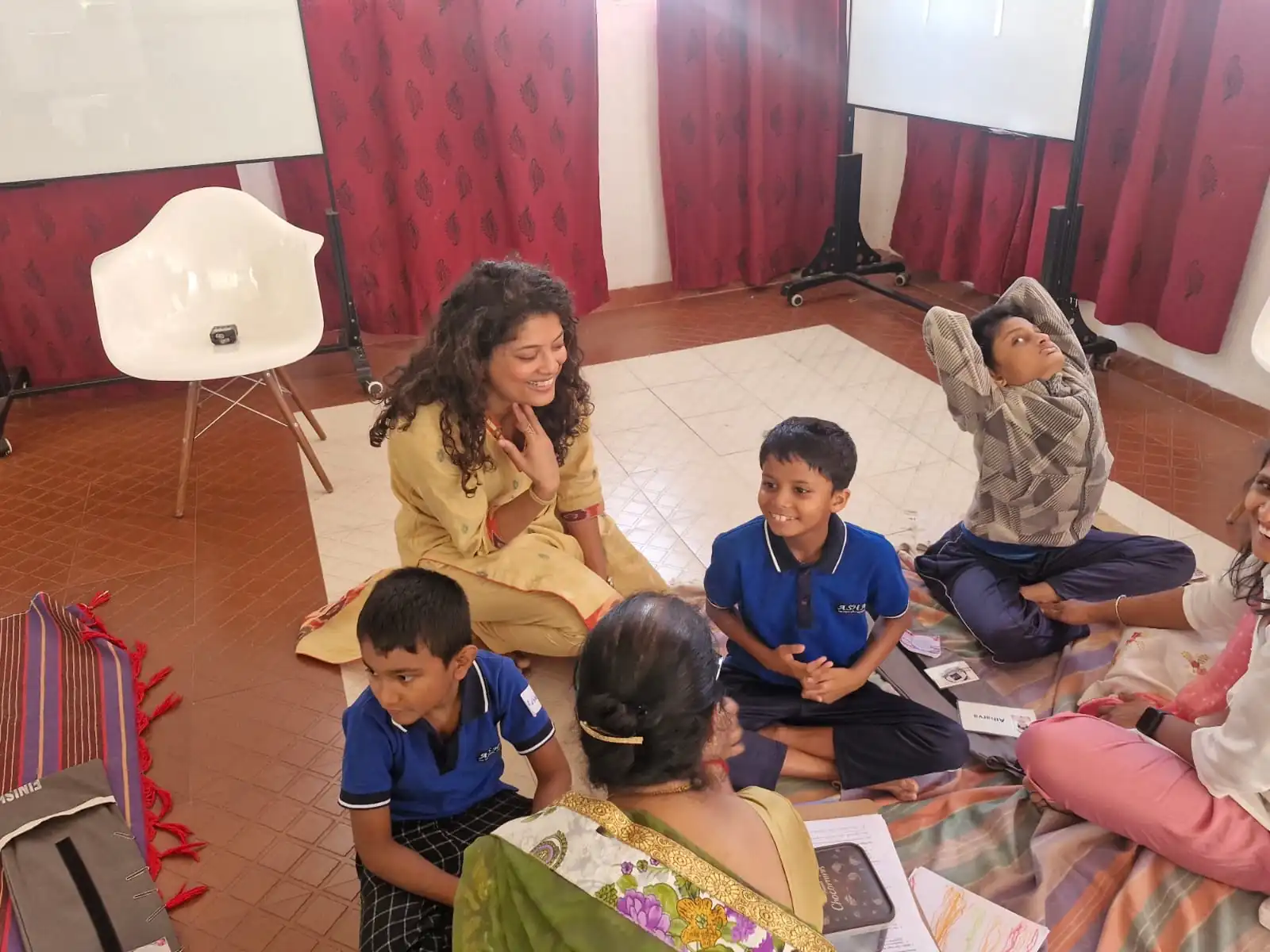
It has been a while since I’ve been consumed by a singular thought: how to do something for children without making it about myself.
While the very foundation of Artbeat is rooted in my personal journey—my experiences learning, healing, and navigating life—my goal for this visit was different. I wanted to understand how to give agency back to the children.
I recently invited a musician friend to join me. She declined, admitting she couldn't gather the courage to disassociate emotionally; she feared being heartbroken by the sight of children with severe autism. I asked myself then: Could I do it? Could I look without breaking?
I realized I could. Not because these children don’t need support, but because they do not need to be rescued. When given a space to thrive, they aren't "cases" or "disabilities"—they are individuals with jokes to share, songs to sing, and boundaries to set.
The Observers and the Explorers
I wasn't formally introduced to the students, only the teachers. This created a fascinating dynamic where I became the object of their curiosity:
- Deepika was the disciplined, silent observer. While focused on her task, she watched me with a quiet intensity, trying to decode who I was and what I was jotting down.
- Ashwin was her energetic contrast. He finished his work with lightning speed just to stand by my side, his presence a silent question: "What are you doing?"
- Monica carried a glint of mischief. She wasn’t interested in my notes; she was interested in me. She wore a knowing smile all morning that erupted into a hearty laugh at lunch. Usually, a stranger laughing might make one feel self-conscious, but with Monica, I felt invited. I was finally in on the joke.
The Music of Communication
Lunch began with a prayer sung in perfect tune, a moment that solidified my hope: music is the ultimate tool for self-expression here.
I watched one boy call for his teacher using a single, clear note, then request a spoon with another strong, resonant tone. He lifted his hand like a classical maestro, acknowledging the power and sanctity of the sound. I wondered—is he singing his feelings out the same way I do?
Later, I felt a presence beside me. A boy was staring, and assuming he wanted to sit, I scooted over. He didn't budge. Somehow, instinctively, I realized I wasn't just in his way—I was in his place.
As I apologized and stood up, he slid into his rightful seat. His teacher mentioned he sits there every day. I felt a surge of pride in that moment, not for myself, but for him. He had exhibited agency and set a firm, polite boundary—a skill so many "typical" adults struggle with.
ASHA doesn't feel like a place of struggle; it feels like a safe space. These children don't need us to save them; they need the world to provide the space for them to simply be.
I am hoping with all my heart that Artbeat can become a part of this wonderful ecosystem, allowing music to exist in even more ways than it already does.